Special Topics Course for Fall 2026
Instructor: Dr. Rachel Bronson, Distinguished Visiting Professor of International Affairs
This Fall, explore Nuclear Strategy and Deterrence in the Middle East as part of AUD’s Special Topics course offerings.
Designed for graduate students and professionals in international affairs, diplomacy, public policy, defence, security, and related fields, the course examines the strategic and political dimensions of nuclear deterrence in the Middle East, one of the most pressing issues shaping today’s geopolitical landscape.
Join Dr. Rachel Bronson, Distinguished Visiting Professor of International Affairs, for an engaging learning experience combining academic insight with practical policy perspectives.
The UAE sits at the center of one of the world’s most consequential nuclear neighborhoods: bordered by a threshold nuclear state, alongside a neighbor contemplating its own program, and within range of major nuclear security dynamics. At the same time, it has deliberately positioned itself as a model nonproliferation state through its approach to civilian nuclear power, the Gold Standard 123 Agreement, and regional security architecture. We have a front-row seat to history, and we are going to use it.
Using the UAE’s experience as our starting point, this course examines the key questions shaping nuclear security today. By the end, you should have a view on whether the UAE model can endure in a rapidly changing world, and what lessons other countries can draw from its experience.
Analyze the key concepts, theories, and debates that shape nuclear strategy, deterrence, proliferation, and arms control.
Evaluate competing explanations for why states pursue or forgo nuclear weapons and how different strategic and regional contexts shape nuclear choice.
Critically assess the applicability of established theories of nuclear deterrence to contemporary regional and multipolar security environments.
Evaluate the UAE’s civilian nuclear program and Gold Standard 123 Agreement within the broader international nonproliferation regime and assess its relevance as a model for other states.
Defend evidence-based arguments about how contemporary geopolitical and technological changes are reshaping nuclear strategy, deterrence, and nonproliferation.
PART I: Foundations |
|
|
Week 1 |
What are Nuclear Weapons and Why are They Different? |
|
Week 2 |
Why States Want the Bomb: Theory and the Gulf |
|
Week 3 |
Deterrence Then and Now |
|
Week 4 |
Lessons from Past Crises |
PART II: The UAE’s Role in the Nuclear Story |
|
|
Week 5 |
Same Atom Different Purpose |
|
Week 6 |
Midterm |
|
Week 7 |
The Gold Standard: The UAE’s 123 Agreement and What It Means |
PART III: Case Studies - The Nuclear Neighborhood |
|
|
Week 8 |
South Asia: India, Pakistan, and What a Nuclear Arms Race Looks Like |
|
Week 9 |
Israel: Ambiguity as Strategy |
|
Week 10 |
Saudi Arabia: The Neighbor Who Might Not Follow the UAE’s Path |
|
Week 11 |
Iran and the Future Regional Architecture |
PART IV: Looking to the Future |
|
|
Week 12 |
What’s Changing: The New Nuclear Landscape |
Dr. Rachel Bronson
Distinguished Visiting Professor of International Affairs
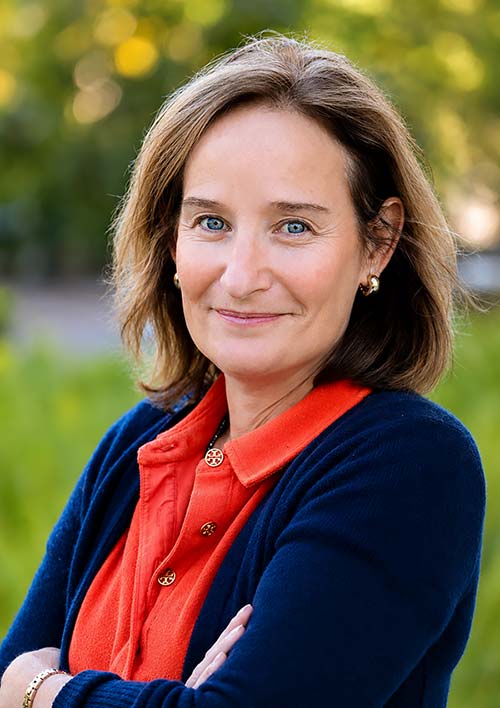 Dr. Rachel Bronson is an internationally recognized expert in geopolitics, energy and Middle Eastern affairs with decades of leadership in global policy and academic research. She currently serves as the Lester Crown Non-resident Senior Fellow for Energy and Geopolitics at the Chicago Council on Global Affairs. She served as President and CEO of the Bulletin of the Atomic Scientists where she oversaw the organization’s programming, publishing, communications, fundraising, finances, and stewardship of the iconic Doomsday Clock. She also served as and Vice President of Studies at the Chicago Council on Global Affairs and held research positions at the Council on Foreign Relations, the Center for Strategic and International Studies (CSIS), the Center for Naval Analyses, and Harvard University. A respected scholar, author, and commentator, Dr. Bronson's work has appeared in Foreign Affairs, The New York Times, and The Washington Post, and she is a frequent media commentator on global affairs.
Applicants must:
Note: Applicants from institutions where English is the language of instruction may be exempt from the English language proficiency requirement, subject to the University's admissions policy
To apply, please follow the steps below: