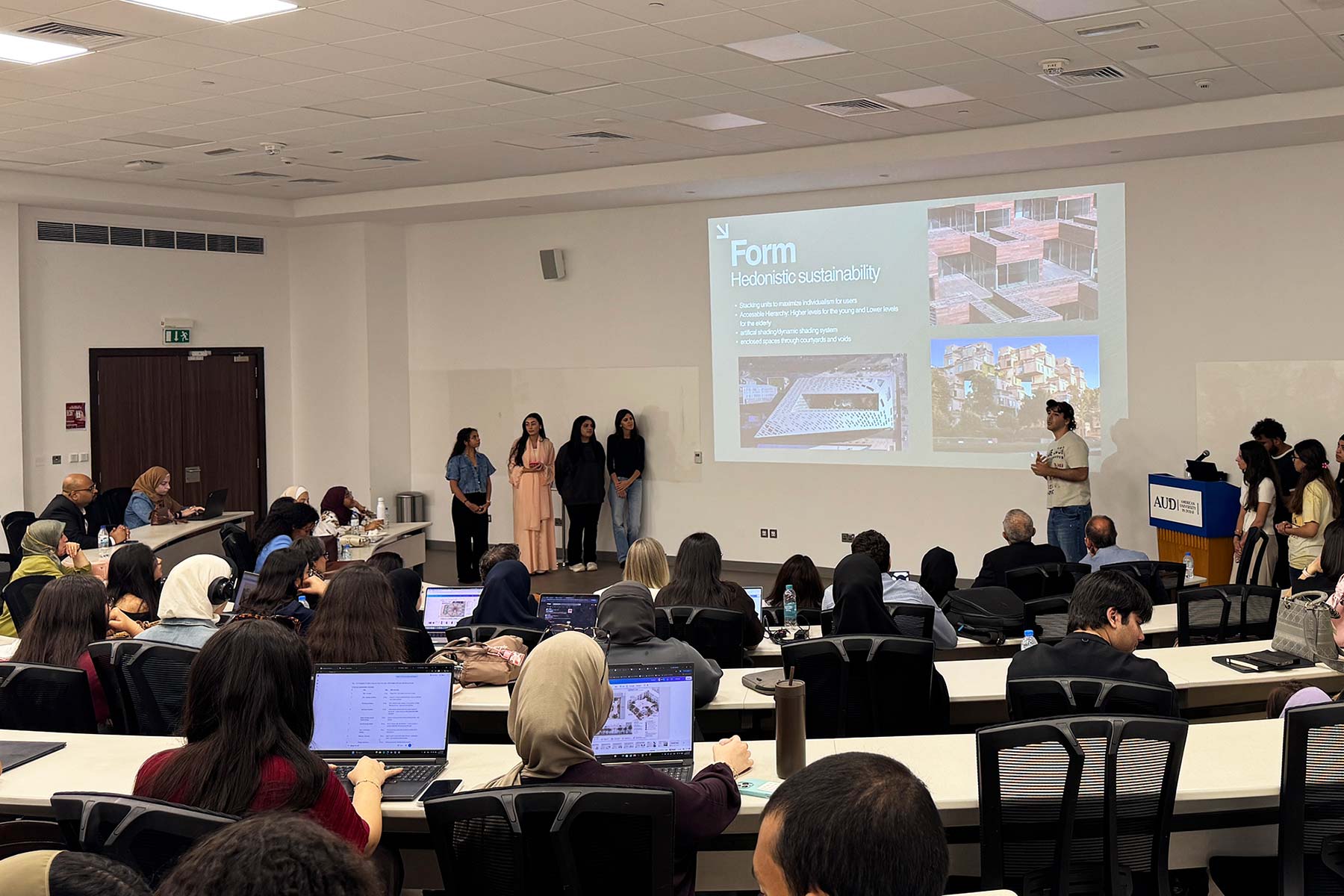
In celebration of the annual World Green Building Week, the American University in Dubai (AUD) partnered with the Emirates Green Building Council (EmiratesGBC) and the World Green Building Council to bring architecture students and built environment professionals together for an interactive, hands-on design challenge focused on sustainability and green building.
The 2026 theme, #BuildItReady, encouraged students to explore passive architectural strategies for eco-friendly and inclusion-focused solutions in specific scenarios, ranging from improving thermal comfort to drafting futuristic innovations.
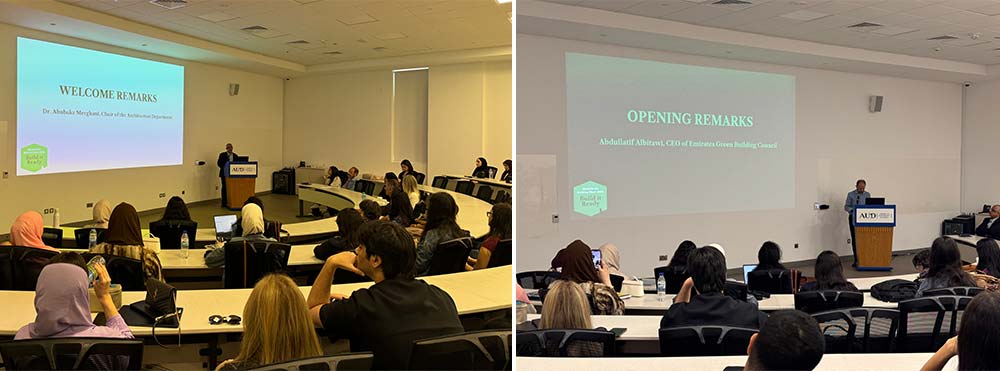
The opening ceremony was led by Dr. Abubakr Merghani, Chair of AUD’s Department of Architecture, and Abdullatif Albitawi, CEO of the Emirates Green Building Council. Albitawi highlighted how climate change and other environmental challenges require architects to rethink familiar approaches to designing, constructing, and managing buildings in the UAE. He emphasized the need for architects to approach these challenges differently and develop new solutions and ideas.
Students were divided into seven groups for a two-hour collaborative working session, with each group responding to a real-world problem statement provided by industry partners, including Inline Consultancy, Alpin, Woods Bagot, GRFN, Climatize, and Egis.
Their challenges ranged from inclusive housing for aging in place and a nearly net-zero desert settlement for 100,000 residents to overlooked urban heritage, a resilient community center for 2035, and ways to improve outdoor comfort in the hot, arid climates of Riyadh and the Gulf.
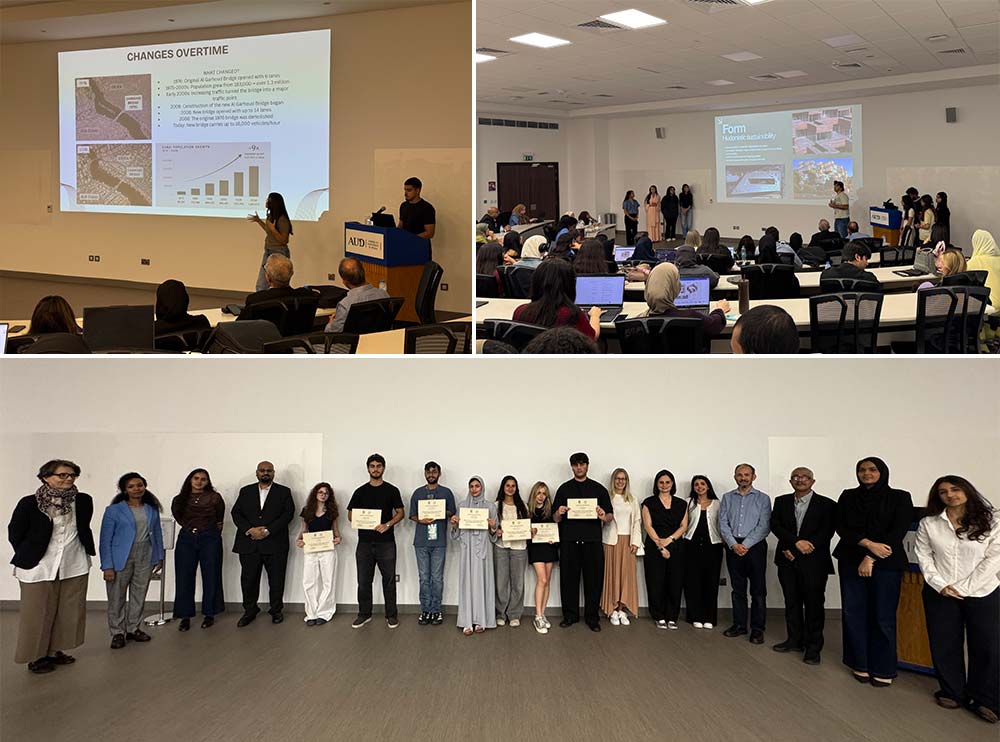
For students, the challenge provided an opportunity to translate classroom learning into responses to real-world sustainability issues. One group, for example, explored sustainable housing through inclusive design strategies such as sliding doors, high-contrast colors for visually impaired users, and carefully considered transitional spaces. Throughout the process, industry professionals introduced practical considerations including thermal comfort, embodied carbon, accessibility, resilience, environmental performance, and project feasibility within the regional context.
The challenge culminated in student presentations to a jury, where teams received feedback on both their ideas and design approaches. Rather than focusing on competition, the event emphasized collaboration, knowledge exchange, and the development of practical problem-solving skills.
At the conclusion of the event, students received participation certificates in recognition of their contribution and engagement.
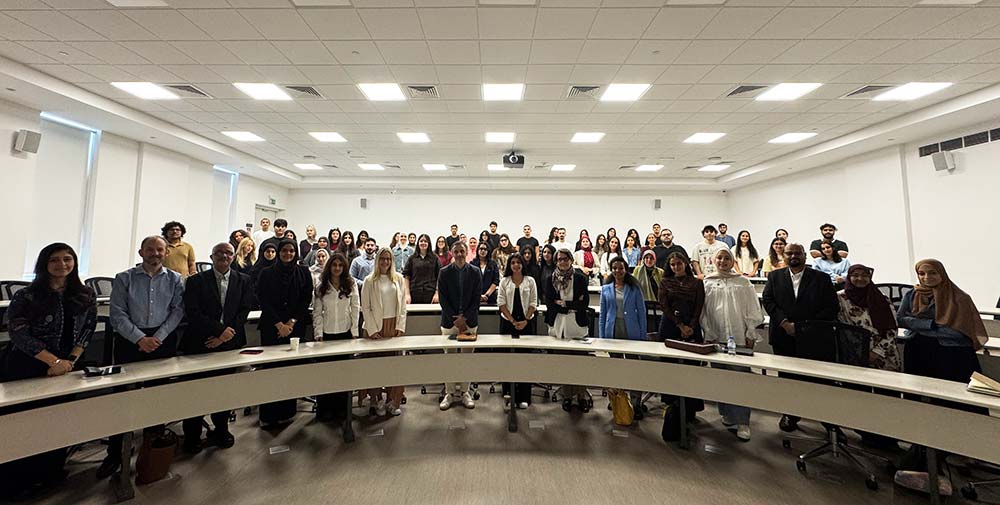
The event also demonstrated how engagement with real-world challenges can help prepare students for the decisions and responsibilities they will encounter as future architects. It was also covered by journalism students from the Mohammed Bin Rashid School for Communication as part of a cross-disciplinary collaboration highlighting the connection between architecture, sustainability, and communication.